The handoff between policy administration and claims management is often where operational efficiency slowes down. Every manual lookup, every duplicate data entry, every phone call to verify coverage that was already sold inflates your Loss Adjustment Expenses and erodes the claims experience.
This is not a technology integration problem. This is a data fragmentation problem that no amount of middleware can solve.
System integration projects focus on making data transfers work. But a successful data transfer does not mean the data is useful, complete, or timely enough to eliminate manual intervention.
The breakdown happens at the edges
Research shows that insurers lose the most efficiency not within individual systems, but at the boundaries between them:
Each of these handoffs adds 1-5 days of silent delay and forces claims handlers to become system integrators rather than claims professionals.
Most system integration projects fail because they optimize data transfers without measuring whether those transfers eliminate manual work. IT delivers an API that successfully moves data between systems, but claims handlers still spend hours on manual reconciliation.
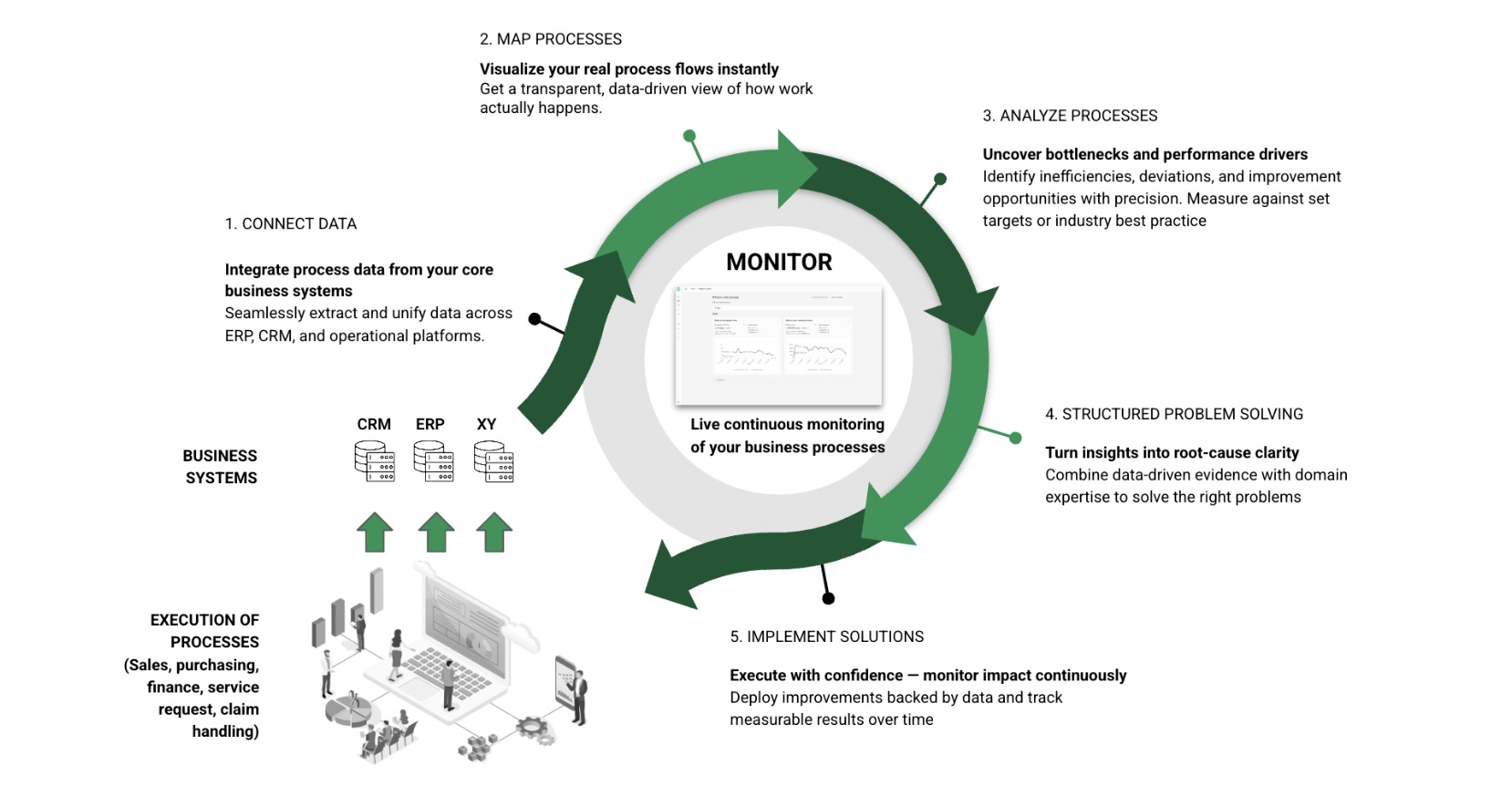
Namuda eliminates the guesswork by creating a transparent view of how data actually moves through your organization. Every data gap is tracked. Every manual intervention is quantified. Every system handoff is measured against live baseline performance. This visibility enables you to identify the root causes of inefficiency and implement targeted fixes that permanently eliminate waste.
What real-time process intelligence reveals
Namuda does not replace your policy or claims systems. It sits on top of your existing infrastructure and creates a common data layer by analyzing the digital traces left behind by every policyholder interaction: policy issuance, endorsements, payments, FNOL intake, claim status changes, adjuster notes, and settlement transactions.
This common data layer enables you to analyze cross-system workflows and identify exactly where process deviations, inefficiencies, and data losses occur. By reconstructing the actual flow of data between systems, Namuda exposes:
The whole policy lifetime
Data fragmentation does not just slow down claims processing. It creates inconsistent policyholder experiences that drive churn.
When a policyholder calls to file a claim and has to repeat information they already provided during policy purchase, they notice. When coverage details are wrong because claims intake did not have access to the latest policy endorsements, they notice. When settlement takes longer because the adjuster had to manually verify coverage limits, they notice.
Namuda gives you the analytical visibility to identify these experience-breaking failures and fix them at the source. By analyzing the full lifecycle from policy issuance through claims settlement, you can pinpoint exactly where process deviations create friction, implement targeted improvements, and measure the impact on policyholder satisfaction and retention.
Ready to bridge the gap between policy and claims?
The gap between policy and claims is not a technology problem. It is a visibility problem. Your systems are moving data, but you cannot see where that data fails to flow, why manual intervention is required, or what it costs you.
Start off with a 2-week process scan to reveal the most severe root causes of inefficiency.
Every exception and manual workaround adds cost.
Namuda detect non-standard paths before they become systemic.